ADDICTION RISK
Published:

Addiction Risks: Comparison Between Classical Psychoactive Substances and Amazonian Plant Preparations
Introduction
Addiction to psychoactive substances is a biopsychosocial condition in which the brain’s reward mechanisms are altered. Many substances increase dopamine release, forming a cycle of “pleasure → habit → tolerance → withdrawal”.
However, different substances vary significantly in addiction potential and long-term risk.
Biology of Addiction: Why It Happens
Modern models show that psychoactive substances disrupt the brain reward system and create a positive feedback loop between physiological changes and repeated use.
Over time this leads to:
- reduced sensitivity to pleasure
- stronger withdrawal symptoms
- increasing dosage
Classical High-Addiction-Risk Substances
Nicotine
Nicotine is officially recognized as an addictive substance.
It acts on acetylcholine receptors and creates strong behavioral reinforcement.
Alcohol
Alcohol is one of the most widely used psychoactive substances globally.
Frequent use is associated with significant health and societal risks.
Opioids and Strong Stimulants
Opioids and some stimulants are associated with severe addiction and high overdose mortality.
Hallucinogens and Amazonian Plants: Current Knowledge
Prevalence of Use
Psychedelics are used far less frequently than classical addictive substances.
Addiction Potential
Scientific literature suggests:
- classical psychedelics generally show low physical dependence potential
- psychological adverse effects are possible
Possible risks include:
- anxiety
- depersonalization
- persistent visual disturbances
In vulnerable individuals, risk of psychotic disorders may increase.
Important Clarification About “Amazonian Plants”
It is important to distinguish between:
Traditional ritual use
Usually controlled and infrequent.
Uncontrolled recreational use
May carry psychological risks.
Chart: Relative Addiction Risk
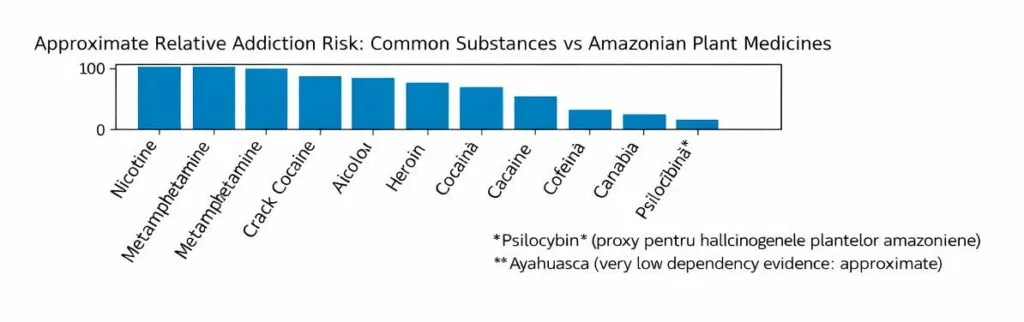
The chart shows:
- Highest risk — nicotine, opioids, stimulants
- Medium risk — alcohol, caffeine
- Low risk — psychedelics
- Very low physical dependence risk — some ritual plant preparations
Why We Cannot Say “Safe”
Even low-addiction-risk substances can:
- cause psychological issues
- trigger psychiatric disorders
- be dangerous outside controlled settings
Final Conclusions
- Addiction develops through changes in the brain reward system.
- Nicotine, alcohol, and opioids are among the main drivers of addiction.
- Psychedelics generally show lower addiction risk but are not risk-free.
- Context of use strongly influences risk.